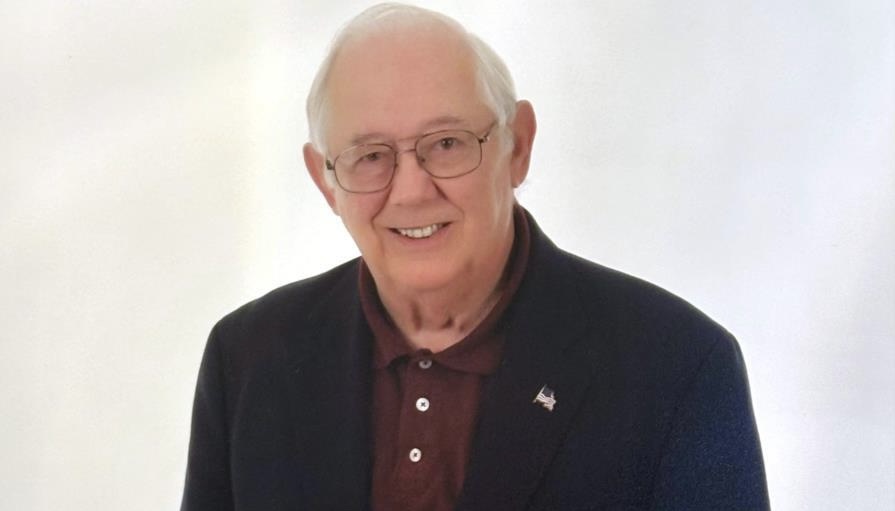
This past week, a fellow Pastor, Preacher, Mentor breathed his last breath and received his eternal reward. I actually attended his Celebration of Life Service yesterday and the word “Faithful” was highlighted for the entire Worship Gathering. He was faithful til the very end. This fell in line with our preaching schedule and I was able to share this message this past Sunday at Fusion Church as we continued our series from 1 Timothy.
So, here is the Probing Question of 1 Timothy 4:11-16. What does it look like for a minister of the gospel to remain truly faithful — not just at the start of his calling, but all the way to the end? It is one thing to begin well. It is another thing entirely to finish well. A man can preach faithfully for years and eventually drift from sound doctrine. He can possess tremendous gifts and neglect his character. He can become so consumed with doing ministry that he stops watching over his own soul. The question is not simply who enters ministry with passion and potential. The question is who endures.
In 1 Timothy 4:11-16, the apostle Paul turns his attention directly to young Timothy and lays out a portrait of the faithful minister. His instructions are not merely for entering ministry — they are for enduring in it. And they carry weight not only for those who preach, but for every person sitting in the pews. Because a congregation that understands what God requires of its leaders is a congregation that knows how to pray for them. So, what are the marks of a Faithful minister?
He Prescribes Sound Doctrine
Paul’s opening charge to Timothy is direct: command and teach these things. Not suggest. Not offer personal opinions. Not tailor the message to what people want to hear. Command and teach.
The reason is straightforward. The pastor is not the source of the message. God is. The church belongs to God, and the Word belongs to God. A preacher has no authority to stand behind a pulpit and demand that people obey his own opinions, but when Scripture speaks, he has every responsibility to say plainly: this is what God has said.
Charles Spurgeon once remarked that the Bible is not God, but it is God’s voice — and that he could not hear it without awe. That is the posture a faithful minister must bring to Scripture. Think of an ambassador sent to a foreign nation with a message from his king. The moment he begins editing that message — softening what is hard, omitting what is unpopular, adding what he thinks people want to hear — he has stopped functioning as an ambassador. His job is not to rewrite the message. His job is to deliver it faithfully.
A congregation should expect its pastors to preach things that are sometimes uncomfortable. Not because discomfort is the goal, but because the goal is faithfulness to what God has actually said.
He Patterns Holy Living
Paul tells Timothy not to let anyone look down on him because of his youth, but to set an example — in speech, in conduct, in love, in faith, and in purity. The solution to a lack of respect is not to demand it. It is to earn it through a life worth following.
A pastor’s authority is not established only by what comes from his mouth. It is reinforced by how he lives his life when no one from the church is watching. How does he speak in private? How does he treat people when he is frustrated? How does he conduct himself on an ordinary Tuesday? Does he genuinely love the people he serves, or has ministry turned people into problems and projects and numbers?
Paul’s mention of purity is particularly sobering. Gifting can never compensate for ungodliness. A man can be a compelling communicator and still be living in moral contradiction. There is a real danger in ministry of becoming what might be called a spiritual road sign — always pointing others toward holiness while never moving there yourself. Preaching prayer without praying. Preaching love without loving. Preaching purity while hiding secret sin.
Paul’s word to Timothy is clear: do not merely point people toward godliness. Walk there in front of them. And this principle does not belong to pastors alone. Parents, teachers, small group leaders, mature believers — the most powerful sermon any of us will ever preach may be the life we live after Sunday is over.
He Progresses in His Gifts
Paul instructs Timothy to devote himself to the public reading of Scripture, to exhortation, and to teaching. He says do not neglect the gift you have. He says practice these things, immerse yourself in them, so that all may see your progress.
Notice he does not say so that all may see your perfection. He says progress. A faithful minister should still be growing. A gift from God is not an excuse to stop developing. Natural ability is not the same as developed ability. A musician who refuses to practice because he believes God gave him talent will eventually become sloppy. Ministry is no different.
God’s calling is not permission to become lazy. It is motivation to become diligent. A preacher should be a better student of Scripture after twenty years than after two. Wiser in counsel. More compassionate as a shepherd. More disciplined as a believer. The principle applies to every follower of Christ: none of us have arrived. Until God calls us home, there is always a next step to take.
He Perseveres in Faithfulness
Paul closes this passage with a charge that ties everything together: keep a close watch on yourself and on the teaching. Persist in this.
A minister can destroy his ministry by abandoning either one. He can maintain orthodox doctrine and collapse morally. He can maintain a respectable outward life while slowly drifting from biblical truth. Paul says watch both — your life and your doctrine, your character and your convictions.
Faithfulness is measured over time. Ministry is not a sprint. It is a marathon. The challenge is not leaving the starting line with enthusiasm. The challenge is crossing the finish line faithfully. Galatians 6:9 reminds us not to grow weary in doing good, and 1 Corinthians 15:58 calls us to be steadfast, immovable, always abounding in the work of the Lord.
The stakes, Paul reminds us, are eternal. Souls are involved. That is why doctrine matters. That is why character matters. That is why perseverance matters. As Spurgeon once said, keep the Word of God and the Word of God will keep you.
The marks of a faithful minister — sound doctrine, holy living, developed gifts, and enduring faithfulness — are not merely a standard for those who preach. They are a picture of what it looks like to follow Christ with your whole life, all the way to the end.
John McMillian Sr modeled and exemplified this passage for us Preachers and Pastors and I am eternally grateful for his life, legacy and example. Lord, may You give me a pure heart and clean hands all the days of my life! It’s my prayer that the word “faithful” would be highlighted when you return or I cross chilly Jordan!